Skip to checklist
A LITTLE PLANNING. MORE PEACE OF MIND.

Be ready
when it matters.

Build a personalized emergency go-bag for your household, see what you already have, and quickly find the rest.

Build a personalized emergency kit in a few minutes.
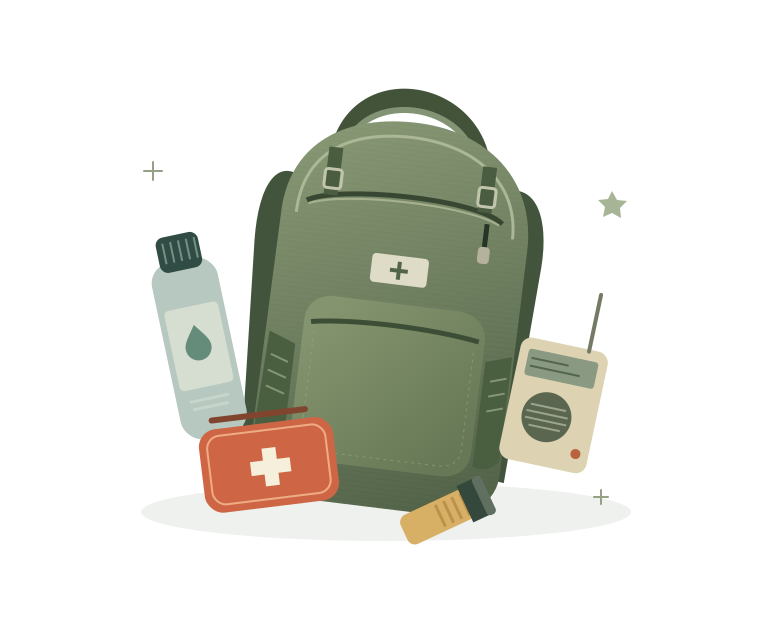
SMALL STEPS. EVERYDAY READINESS.An olive-green go-bag with water, a first aid pouch, a radio, and a flashlight
A little more prepared.One essential at a time.
YOUR PEACE-OF-MIND STARTER KIT
STEP 01Tell us about your household
STEP 02Check what you already own
STEP 03Get the remaining supplies

Based on general emergency preparedness guidance. Consult Ready.gov and local emergency authorities for advice specific to your area.

MAKE IT YOURS

A kit that fits your life.

Start with your household. We’ll work out the essentials.

1
person

1 person × 3 days = 3 gallons minimumReady.gov recommends approximately 1 gallon per person per day for drinking and sanitation. Learn why

Keep portable essentials ready to carry. Store your full water and food reserves separately where needed; the total above is not a suggested backpack load. Quantities are starting estimates; adjust to your needs.

YOUR PLAN, ONE CHECK AT A TIME

Let’s put your kit together.

Check off what you have. We’ll help with what’s next.

Loading your saved checklist…

Your kit is 0% ready

0 / 21 essentials packed

Getting started

Every item is a step forward. Start with what you already have.

Water

0 / 1 packed
3 gallons

Emergency water supply

For drinking and sanitation. Store approximately one gallon per person, per day.

Why do I need this?

Ready.gov recommends approximately one gallon per person per day for drinking and sanitation. Individual needs can be higher. Keep your full reserve accessible; it may need separate storage from your bag. Learn why at Ready.gov

$6–$15Est. for recommended quantityBuy on Amazon

Food

0 / 1 packed
3 person-days

Non-perishable emergency food

Several-day supply of non-perishable food. Choose familiar foods that fit dietary needs.

Why do I need this?

Plan a full day of food for each person, for each selected day. Package “servings” are not necessarily full meals. Check calories, allergies, preparation needs, and expiration dates. Learn why at Ready.gov

$24–$45Est. for recommended quantityBuy on Amazon

Communication

0 / 2 packed
1 radio

Hand-crank emergency radio

A battery-powered or hand-crank radio for receiving local updates.

Why do I need this?

Radio broadcasts can provide updates when internet or cell service is interrupted. A radio with NOAA tone alerts can also cover the next checklist item; you do not need to buy both.

$25–$60Est. for recommended quantityBuy on Amazon
1 radio

NOAA Weather Radio

Look for a receiver with a tone-alert feature for weather broadcasts.

Why do I need this?

Check local coverage and the receiver’s features. If your emergency radio also receives NOAA tone alerts, check both radio entries as packed. These searches are not NOAA endorsements.

$25–$60Est. for recommended quantityBuy on Amazon

Lighting

0 / 1 packed
1 flashlight

Flashlight

A compact, dependable light for each person in your household.

Why do I need this?

Keep a light accessible to each household member and check that its batteries work. A small flashlight or headlamp is easy to carry.

$10–$25Est. for recommended quantityBuy on Amazon

Medical

0 / 1 packed
1 kit

First aid kit

A clearly labeled kit of basic first aid supplies.

Why do I need this?

Choose supplies suitable for your household and review their instructions. Consider first aid training and any personal health needs with your healthcare professional.

$20–$40Est. for recommended quantityBuy on Amazon

Power

0 / 2 packed
1 assorted pack

Extra batteries

Spare batteries in the sizes your flashlight and radio actually use.

Why do I need this?

AA and AAA are common, but check each device before buying. This is a starting allowance; adjust for your devices’ runtimes and the duration of your plan.

$10–$20Est. for recommended quantityBuy on Amazon
1 power bank

Portable phone power bank

A charged backup battery for each person’s phone.

Why do I need this?

Check phone compatibility and recharge stored power banks regularly. Capacity and charging needs vary. This also covers the backup battery in your phone kit; no duplicate purchase is needed.

$20–$50Est. for recommended quantityBuy on Amazon

Signaling

0 / 1 packed
1 whistle

Emergency whistle

For signaling for help. Keep it within easy reach.

Why do I need this?

A small whistle is a simple way to signal your location. Attach one to each person’s bag.

$5–$10Est. for recommended quantityBuy on Amazon

Air / Protection

0 / 1 packed
1 5-mask pack

Dust masks

Consider well-fitting particulate masks, such as N95s, for your supplies.

Why do I need this?

Particulate masks have limits and do not protect against every airborne hazard, gases, or vapors. Follow local emergency instructions and product directions.

$10–$25Est. for recommended quantityBuy on Amazon

Shelter

0 / 3 packed
1 roll

Plastic sheeting

Heavy-duty sheeting for your shelter-in-place supplies.

Why do I need this?

Sheltering guidance depends on the emergency and your building. Follow officials’ instructions; use Ready.gov to plan supplies for your space. Learn why at Ready.gov

$10–$25Est. for recommended quantityBuy on Amazon
1 pair

Scissors

A sturdy pair for cutting tape, packaging, or sheeting.

Why do I need this?

Store utility scissors with protective covers and out of reach of children. Learn why at Ready.gov

$5–$15Est. for recommended quantityBuy on Amazon
1 roll

Duct tape

An everyday tool for temporary repairs and shelter supplies.

Why do I need this?

Keep a roll with your sheeting and scissors. Consult local emergency guidance for shelter-in-place instructions. Learn why at Ready.gov

$5–$10Est. for recommended quantityBuy on Amazon

Sanitation

0 / 3 packed
1 pack

Moist towelettes

Body wipes for personal sanitation when running water is limited.

Why do I need this?

Budget one compact pack per person for each three days; adjust pack size to daily needs. Dispose of used wipes with waste, not in toilets.

$4–$8Est. for recommended quantityBuy on Amazon
6 bags

Garbage bags

Heavy-duty bags for waste management and keeping supplies dry.

Why do I need this?

This starter allowance is two bags per household per day. Adjust for your household and follow local waste-disposal instructions.

$3–$6Est. for recommended quantityBuy on Amazon
1 pack

Plastic ties

A small assortment for securing bags and organizing supplies.

Why do I need this?

Store with garbage bags for personal sanitation and waste management.

$4–$10Est. for recommended quantityBuy on Amazon

Utilities / Tools

0 / 1 packed
1 tool

Wrench or pliers

May be useful for shutting off utilities when authorities recommend doing so.

Why do I need this?

Consult your local utility and emergency authorities about appropriate tools and training. Do not attempt utility work without their guidance. Learn why at Ready.gov

$10–$25Est. for recommended quantityBuy on Amazon

Food preparation

0 / 1 packed
1 opener

Manual can opener

A non-electric opener for any canned food in your kit.

Why do I need this?

Check that you can open and prepare the foods you have packed without electricity.

$8–$15Est. for recommended quantityBuy on Amazon

Navigation

0 / 1 packed
1 map set

Local maps

Get a printed map of your local area.

Why do I need this?

Obtain local evacuation maps from your city, county, or emergency management agency. A road atlas can supplement these, but may not show your local evacuation routes.

$0–$20Est. for recommended quantityBuy on Amazon

Communication / Phone

0 / 2 packed
1 cable set

Cell phone charging cables

Compatible cables for phones and other essential devices.

Why do I need this?

Match the connector to your phone, wall charger, and power bank. These cables also cover the charging cables in your power supplies.

$8–$15Est. for recommended quantityBuy on Amazon
1 charger

Wall charger

A compatible USB wall adapter for when power is available.

Why do I need this?

Your portable power bank is listed once under Power. A wall charger lets you replenish it and your phone when electricity is available.

$10–$20Est. for recommended quantityBuy on Amazon

Don’t forget personal essentials

Your kit should feel like yours.

OPTIONAL

Choose what applies to your household. These reminders are saved separately and are not included in the essentials progress or cost estimate. Arrange prescription supplies with your pharmacy or clinician.

My Emergency KitKeep a paper copy with your supplies.
A LITTLE KNOWLEDGE GOES A LONG WAY

Every essential has a purpose.

Emergencies can interrupt electricity, clean water, transportation, and communication. Stores may be hard to reach. A few basic supplies can help you plan for those disruptions.

Start with general guidance, then adapt it to your household and the place you call home.

Explore the Ready.gov checklist
GOOD QUESTIONS. SIMPLE ANSWERS.

A little more clarity.

Preparedness starts with understanding.

What’s the difference between a go-bag and a stay-home kit?

A go-bag prioritizes portable essentials for leaving quickly. A stay-home kit holds larger reserves. The mode toggle changes planning advice, not the daily water requirement. Your full water supply can be heavy: keep reserves accessible and plan what you can realistically transport.

Is three days enough?

Three days is a starting point for this tool, not a guarantee. Your location, climate, household needs, and local authorities may call for a longer supply. Choose 7 or 14 days when appropriate, and follow local guidance.

Do I have to buy everything on Amazon?

No. Start with what you own. Local shops, grocery stores, and other retailers may be good options. Amazon links are searches, not recommendations of specific tested or approved products. You can also obtain maps and documents locally.

How are quantities and prices calculated?

Water scales at one gallon per person per day. Food is counted in person-days, not manufacturer servings. Other quantities are starting allowances. Manual price ranges are multiplied by recommended quantities, and checked items are removed from the estimate. If your plan grows, items needing larger quantities return to Missing. The estimate then budgets the full recommended quantity, not just the difference.

Will my checklist be here when I return?

Your household settings and checked items are stored in this browser on this device. No account is needed. Clearing browser data or using another device will not retain your checklist. If storage is blocked, the checklist works for the current session.

When should I review my kit?

Review it regularly and whenever your household or plans change. Check expiration dates, battery charge, clothing sizes, and local evacuation guidance. Completing this list does not guarantee safety or cover every personal need.

A little planning today. A little more peace of mind tomorrow.Back to your kit ↑

This website is an independent preparedness tool and is not affiliated with or endorsed by FEMA, Ready.gov, NOAA, or Amazon. Emergency needs vary by person, location, climate, health needs, and disaster type. Follow guidance from local emergency officials.

© 2026 ReadyKit Your checklist stays in your browser.
21 items leftEst. $371 · midpoint

My Emergency Kit

ReadyKit · Go-Bag

Household: 1 · Duration: 3 days · Water: 3 gallons minimum

One gallon per person per day for drinking and sanitation. Store full reserves separately where needed.

Completed supplies

    None.

    Missing supplies

    • Emergency water supply 3 gallons
    • Non-perishable emergency food 3 person-days
    • Hand-crank emergency radio 1 radio
    • NOAA Weather Radio 1 radio
    • Flashlight 1 flashlight
    • First aid kit 1 kit
    • Extra batteries 1 assorted pack
    • Portable phone power bank 1 power bank
    • Emergency whistle 1 whistle
    • Dust masks 1 5-mask pack
    • Plastic sheeting 1 roll
    • Scissors 1 pair
    • Duct tape 1 roll
    • Moist towelettes 1 pack
    • Garbage bags 6 bags
    • Plastic ties 1 pack
    • Wrench or pliers 1 tool
    • Manual can opener 1 opener
    • Local maps 1 map set
    • Cell phone charging cables 1 cable set
    • Wall charger 1 charger

    Personal essentials — review what applies

    Planning notes

    Pet water: plan each animal’s normal daily needs in addition to the household total. A single emergency radio with NOAA tone alerts may cover both radio entries.

    For utility tools, follow local utility and emergency guidance. Obtain local evacuation maps from your city or county. Keep food suitable for dietary needs and arrange prescription supplies with your pharmacy or clinician.

    This checklist can help you prepare basic emergency supplies. It does not guarantee safety. Follow guidance from local emergency officials. Ready.gov: ready.gov/kit · ready.gov/water · ready.gov/food · ready.gov/shelter · ready.gov/safety-skills